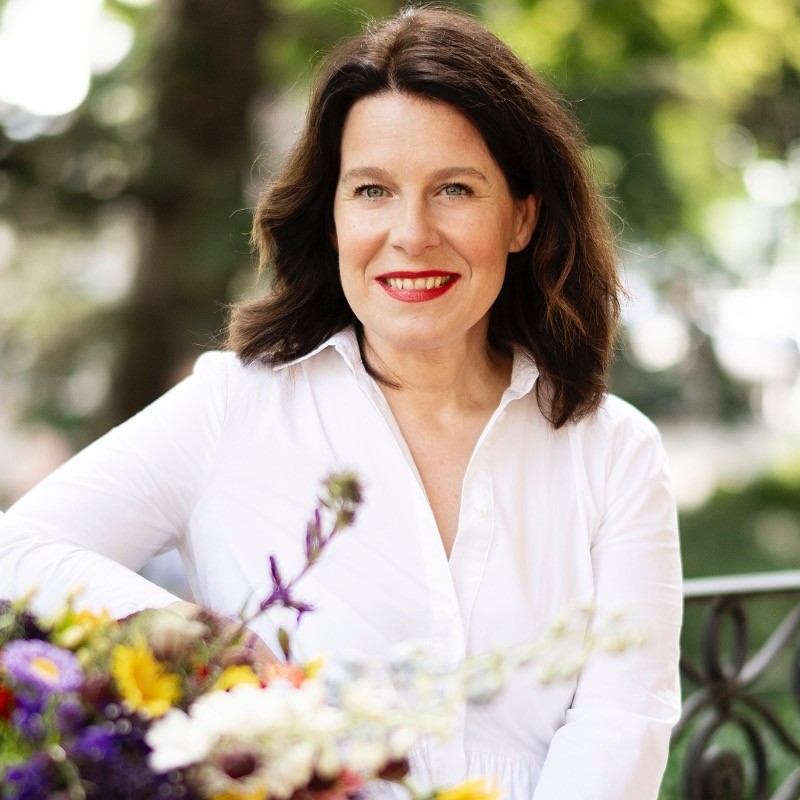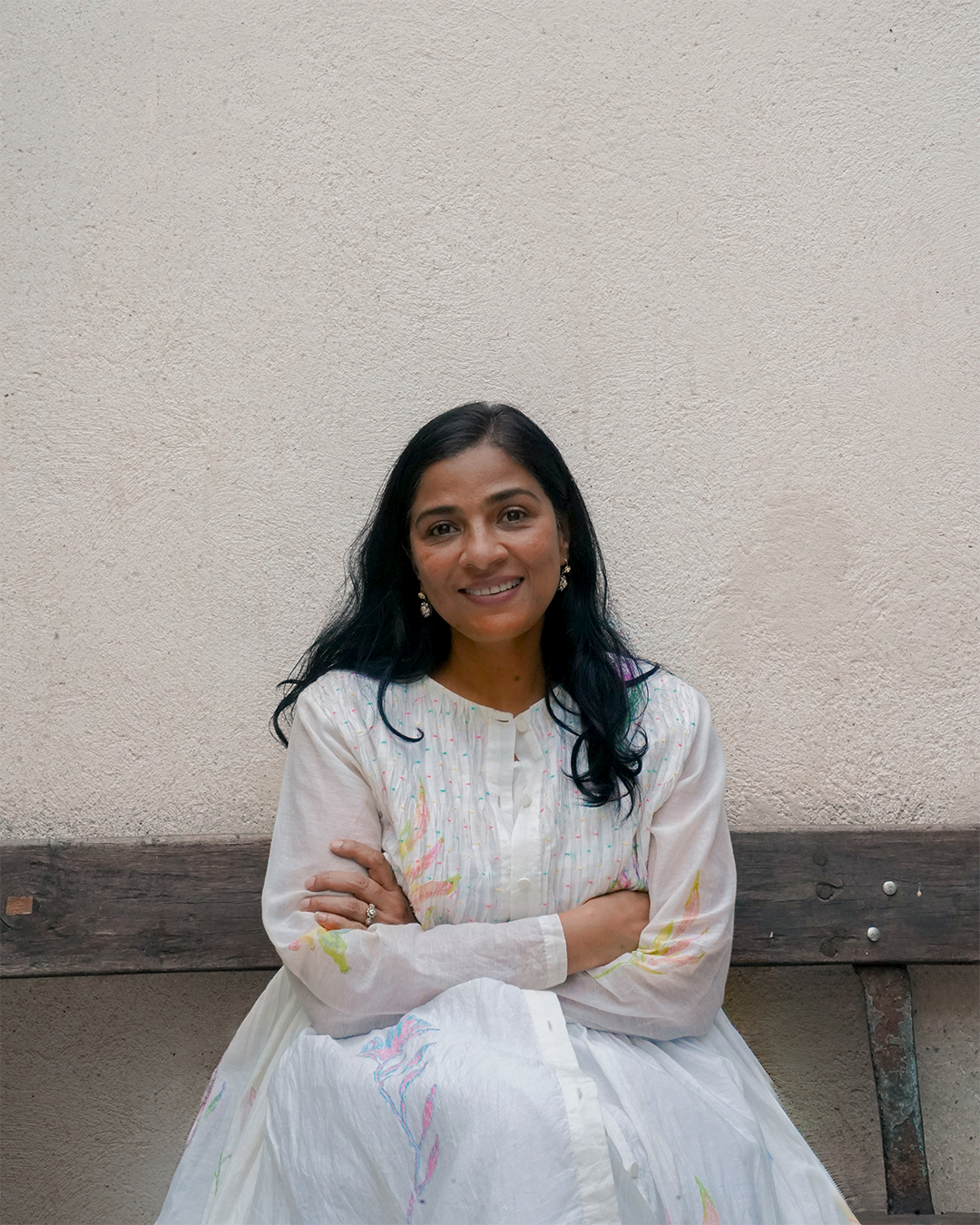
I’m originally from a small town in the north of India, and I come from a family of agriculturists. My father owned land and was a farmer, so my relationship with the land and with nature has always been deeply rooted in where I come from.
I’ve been living in Delhi, on the outskirts of the city, for more than a decade now. I have this cute little neighbourhood called Nirvana, and it is wonderfully green. There are all kinds of trees and many home gardens around me. My own house has a mango tree, a neem tree, a moringa tree, a lychee tree, a guava tree, a curry leaf tree, and many other plants and flowers.
I take long walks in the mornings and evenings, and I enjoy being close to nature. In a way, I feel I’ve found a small piece of the peace I left behind in my childhood home, here in this big city.
My everyday life is quite simple and revolves mostly around my home and my studio. I’m either at work in the studio or back at home.
Around my house there is a cute little neighbourhood market with lots of cafés. It has attracted many people like us who have relocated to the city because of work.
In the mornings, you’ll find early risers who are runners and joggers, and many of us eventually meet at the neighbourhood cafés before heading off to work.
I also have a newly opened store quite close by. It is quaint and beautifully done, with a lot of antique furniture and pieces that I’ve collected from different places across India.
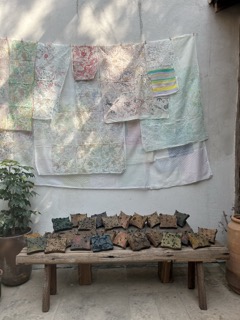
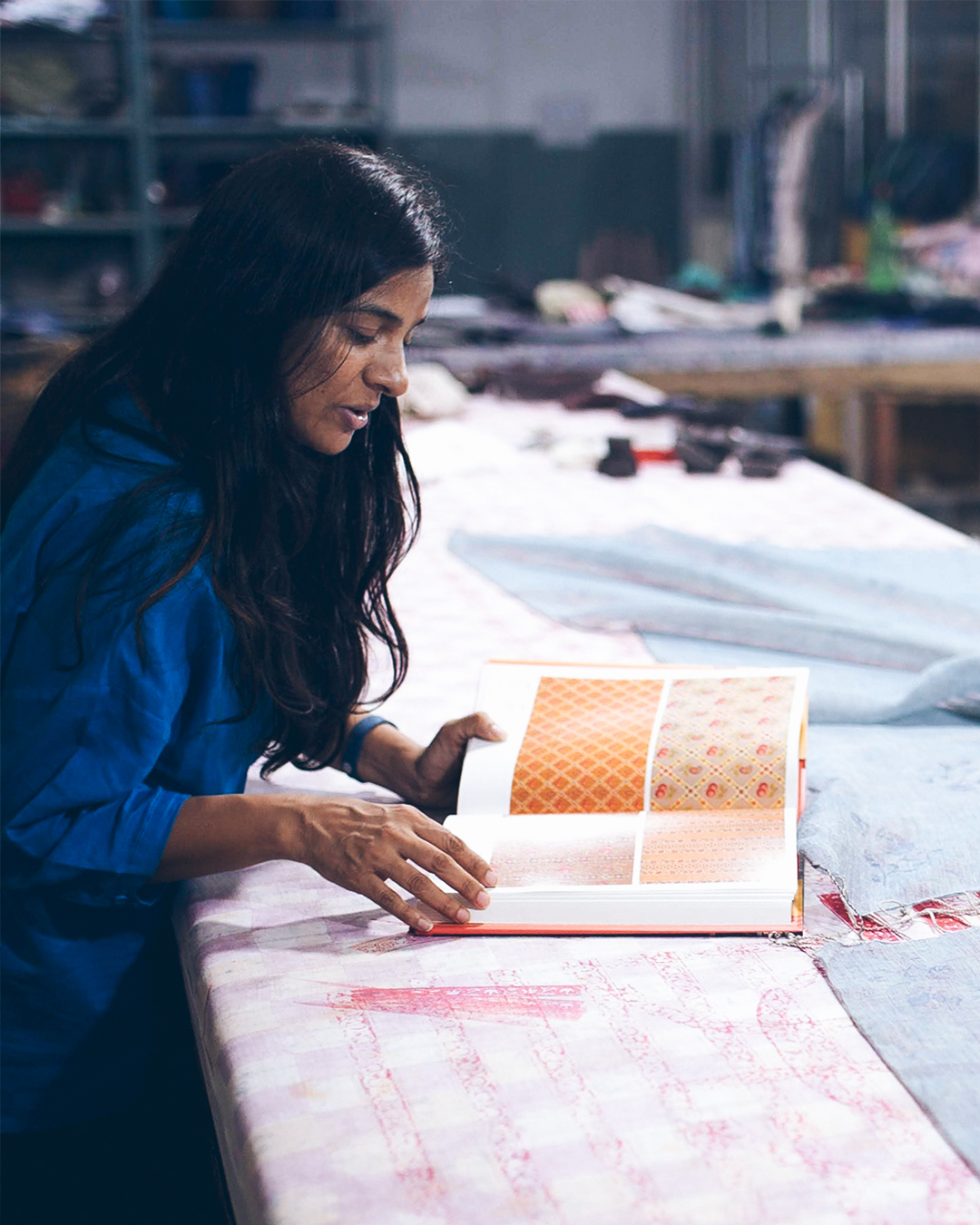
And then there is the studio. It feels like a little sanctuary where the block printers, textile workers, embroiderers, makers and designers all sit and work together. It is almost like a world within a world — a world that I belong to and in which I am deeply, deeply involved.
There is so much in the world to see, and actually so much to see in India itself. There could be hundreds of places that I would describe as beautiful and breathtaking.
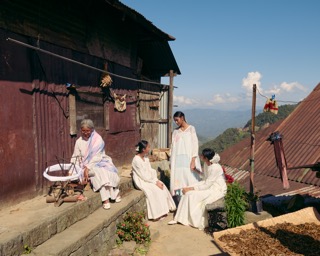
But there was a point in my life when I wasn’t very upbeat because of my health and a lot of personal winning and losing. Around that time, I visited a village in Himachal called Palanpur, and also the Namo village in Ladakh.
Both of these places hold something very special in my heart. At that time, I found a kind of peace sanctuary in them.
Given everything I have seen and everywhere I have travelled, these places have a special place in my memory because they somehow joined me back to my heart again.
If there is a memory of a place where I felt rested, where I belonged, where I was quiet and surrendered, I think it would be these two places.
It is extremely important to travel.
I think that within ourselves, we are just a part of the whole — just a part. And only when we are able to travel do we begin to join all the dots together and understand that there are so many people in the world who live differently.
There are many purposes, many cultures, communities, lifestyles and different lives that one person could live.
It somehow feels to me like the way the Earth goes around the sun. Likewise, at different times in our lives, we have different missions, and with those missions we end up going to different places. And all those places somehow bring us back to where we should have been in our personal journeys.
So, metaphorically, whether it is the journey on the outside or the journey on the inside, I think a person is always travelling — travelling through the places where they are, because of whoever they are at that particular time.
So yes, I think it is extremely important to travel.
I feel a lot has changed, especially over the last decade.
Only the other day I was having a conversation with somebody where I said that, yes, you could say that about many periods in life, and it is easy to say that time flies. But I think all of us would agree when I say that this last decade was not just one decade. It was a journey of a lifetime.
Each one of us has seen wars. We have seen natural calamities taking over. We saw how the world quietened during the lockdown and how everything changed in just a few days. We started living differently and, as people and as a species, somehow got up and went about our lives as if nothing had ever happened.
It makes us think about the larger purpose of who we are and what we are here to do. Evolution doesn’t stay quiet.
With all this noise, I feel that somewhere within our personal journeys, and somewhere within the larger journey of humanity — through everything we win and lose — it is important to reflect on everything.
It is very difficult to bring people back. It is very difficult to take everybody back to where we started, because evolution doesn’t stop for anyone.
But I do feel that being rooted in all of this and then taking a flight perhaps gives us a better direction. We need to understand the weight that we carry from the generations behind us, and what we have to hand over as stories and legacies to the generation ahead of us.
That is extremely important: being rooted in our own real stories, our authenticity and our originality, and then growing from there.
I don’t think I’m anybody to advise anybody about travel.
But I do think it is important to be mindful of what those places already are. They have a character of their own and they have their own people.
We should be respectful of their cultures and know a little bit more about who they are before we get there. I think that gives us more access to their lives, rather than feeling that just because we are tourists, we are entitled to know everything.
Secondly, I think it is important to participate in the local lifestyle — to eat the food that they eat, to live in a certain way, and definitely to visit whatever holds their cultures and communities together, whether that is temples, museums, libraries or anything else.
That is something I would personally do.
I’ve had the great fortune of meeting some extraordinary women in my personal career and life. Each one of them has left an impression on me — of resilience, hope, love, compassion and strength, and of how important it is not to take liberty for granted.
I have greatly admired many people. One of them is Arundhati Roy.
I love her personal journey, from starting from nowhere to becoming one of the most heard and read women in the world. She puts out her stories so beautifully and authentically, without masking them with the idioms and artificial masks of what people might like to hear from her.
She brings with her the real stories of people across the country and of the communities that she has lived with, worked with and known closely.
I personally feel that this has left a great impression on me.
There are some travels I remember where I felt I would rather be alone there.
And there are some trips where I remember thinking, I wish I had my children, my friends, or my husband with me. Or my best friend, so I could share that moment with him.
There were also journeys where I wished I could document what I was seeing — the way I was looking at it, the way I was feeling it. I wished I had carried a journal where I could record everything immediately, exactly as I experienced it in that moment.
There were trips where I remember feeling that I missed a certain kind of music. And there were travels I remember because of the books I had carried with me.
So, there are many stories of travelling with books, people, music, journals, friends and family, children — and of making new acquaintances and new friends.
I think the dream is not necessarily one particular destination. It is the experience of travelling with all these things that make a journey meaningful and make it something you can carry with you long after you return.




















%20SOPHIE%20KIRCHNER%202.jpeg)


%20Ellie%20with%20Bronze%20gymnast%20by%20Michel%20Roue%CC%80che%20(Black%20background)%20copy.jpg)


.jpg)




.jpg)